
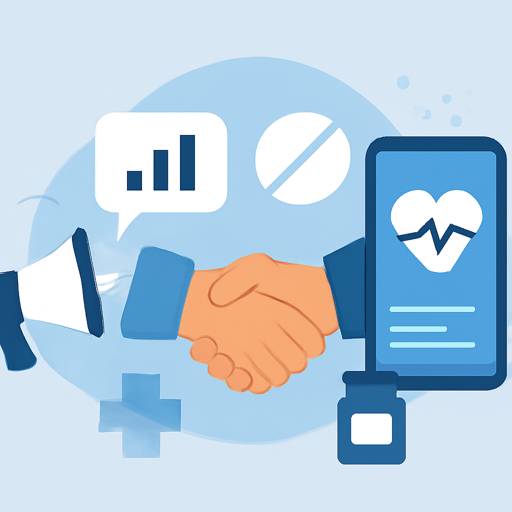
The life sciences industry is undergoing a profound shift from message-centric promotion to experience-led partnership. Healthcare professionals, patients, and payers now expect timely insights, tailored content, and consistent support across channels—without friction or information overload. To meet those expectations, brands are moving beyond siloed tools toward connected ecosystems that unify data, orchestrate outreach, and prove value at every touchpoint. In that context, pharma marketing and modern pharma CRM work together as a single engine: one that aligns field teams and medical affairs with digital channels, transforms scientific content into actionable guidance, safeguards privacy, and accelerates growth while protecting trust.
The New Playbook for Pharma Marketing: Data, Trust, and Omnichannel
For years, promotional strategies emphasized reach and frequency. Today, relevance and respect define success. Effective pharma marketing hinges on orchestrating the right scientific narrative to the right audience at the right moment, then learning from every interaction. That means building durable first-party data, drawing insights from consented behavior, and activating those insights across email, webinars, field follow-ups, and compliant social channels to deliver a coherent, human experience. When a healthcare professional scans a conference QR code or engages with a modular article, the system should recognize the signal, tailor the next touch, and route high-intent queries to the appropriate representative or medical science liaison—seamlessly and compliantly.
Omnichannel excellence starts with a unified content supply chain. Modular claims tagged by indication, audience, and evidence levels allow marketers to assemble hyper-relevant assets without reinventing the wheel for each segment. Integrated MLR workflows ensure claims are accurate and consistently applied, while dynamic templates personalize subject lines, calls-to-action, and references to guidelines or local access updates. The goal is not more messaging; it is sharper, shorter, and more situational messaging—content that respects the clinician’s time and the patient’s journey.
Analytics mature alongside orchestration. Moving from vanity metrics to impact indicators helps teams allocate spend and effort wisely. Engagement depth, scientific topic affinity, and downstream script or access signals, when ethically modeled, show which channels and messages advance understanding rather than merely generate clicks. Predictive “next-best-action” logic, augmented by human judgment, reduces noise and prioritizes interactions that genuinely help a provider make confident, evidence-based decisions. Meanwhile, strong data governance and consent management safeguard privacy, maintaining a clean separation between personal health information and marketing datasets while honoring regional regulations.
Finally, trust is the backbone of enduring relationships. That trust grows when the brand is consistent across touchpoints, transparent about data use, responsive to adverse events and inquiries, and generous with clinically relevant resources—patient education materials, dosing guides, or pathways for financial assistance. With this discipline, pharma marketing becomes a service: not just promoting innovation, but delivering it responsibly to those who need it most.
Why Modern Pharma CRM Is the Backbone of Field and Medical Teams
If omnichannel is the strategy, pharma CRM is the operating system. A life-sciences-specific CRM goes far beyond generic contact management. It unifies HCP master data, affiliations, and institution hierarchies; maps specialty, prescription potential, and scientific interests; and captures the granular context that makes each interaction matter. A representative opening a call plan can see recent congress engagements, content interactions, formulary shifts, and service requests, alongside approved materials tailored to that provider’s clinical focus. The result is not just a “who to call” list—it is a dynamic briefing that improves the quality of every minute spent in front of a customer.
Compliance is baked in. Sampling and signature capture must align with PDMA rules, while medical inquiries and adverse event reporting flow into regulated processes with audit trails. Consent flags travel with the profile, guiding whether a clinician can receive certain emails or digital content. Territory alignment changes are versioned and attributable, and all digital interactions are linked to approved content IDs to maintain end-to-end traceability for MLR. These safeguards protect both the company and the clinician, ensuring that scientific dialogue remains rigorous and appropriate.
On the enablement side, integrated CLM (closed-loop marketing) turns every interaction into a learning moment. When a rep or MSL navigates a digital detail, the system captures topic progression, time on slide, and content outcomes, feeding segment insights back into planning. AI-assisted call objectives recommend the next piece of evidence or support material, based on outcomes with similar profiles—not as a black box, but with transparent rationale that teams can accept, adjust, or reject. That blend of machine guidance and human expertise helps organizations scale personalization without sacrificing judgment.
Crucially, pharma CRM is the connective tissue for cross-functional teamwork. Marketers see how their journeys influence live conversations. Medical affairs learns which scientific topics unblock decisions. Market access gains early visibility into payer hurdles at the account level. Patient support teams receive timely signals to coordinate onboarding resources. When those workflows converge in a single system, cycle times shrink, handoffs get cleaner, and the organization presents as one coherent partner to providers and patients alike.
Case Studies and Real-World Impact with Pulse Health
A mid-sized specialty biopharma launching a first-in-class therapy faced two risks: overwhelming time-pressed specialists with dense materials and under-serving community prescribers who treat the condition less frequently. By unifying omnichannel journeys with CRM-driven insights, the team built micro-segments based on practice setting, prior therapy patterns, and scientific topic affinity. They deployed modular messages that adapted to each segment’s baseline knowledge. Reps used AI-recommended objectives to steer conversations toward the most relevant evidence, while nurture tracks reinforced those touchpoints with succinct follow-ups. Within two quarters, the brand saw double-digit lifts in meeting acceptance and a significant rise in guidelines-aligned prescribing confidence, reflected in post-call surveys and content engagement depth.
In rare disease, a medical affairs group needed to expand HCP awareness without creating promotional noise. They used a life-sciences CRM to map referral networks and identify centers of excellence, then orchestrated medical education content through event invitations, congress recaps, and one-to-one scientific exchanges. Clear consent pathways preserved the firewall between promotional and medical functions. The team tracked topic-level interest—pathophysiology, diagnostic algorithms, or emerging data—and aligned future outreach accordingly. As a result, diagnostic latency decreased in targeted geographies, and time-to-referral shortened as clinicians recognized red-flag patterns earlier.
At the enterprise level, a top-20 pharmaceutical company struggled with elongated MLR cycles and fragmented analytics. Moving to a modular content library, standardizing claims metadata, and plugging approved assets into their CRM’s CLM framework streamlined both creation and measurement. MLR reviewers evaluated reusable claims once rather than re-reading similar text across dozens of assets, cutting review time while raising consistency. Field and digital teams finally shared a single view of performance by message, not just by channel, which informed budget shifts toward the highest-yield topics. The company reported fewer content redundancies and clearer attribution for scientific messages that advanced clinical decision-making.
Platforms that combine omnichannel orchestration with industry-grade CRM are accelerating these outcomes. Organizations adopting solutions such as Pulse Health report smoother MLR alignment, granular message analytics, and better handoffs across field, medical, and patient support teams. By centralizing HCP master data, tracking consent at the attribute level, and activating insights across email, virtual and in-person calls, and on-demand content hubs, teams reduce noise and elevate relevance. The payoff arrives in practical metrics: improved call plan adherence because suggestions are smarter, higher opt-in rates thanks to transparent preference centers, and stronger message recall due to consistent, modular storytelling. Beyond numbers, clinicians experience fewer interruptions and more useful interactions, while patients benefit from faster access to the right information and resources at the right moment.
These case studies underscore a broader principle: when pharma marketing and pharma CRM operate in concert, the brand experience stops feeling like a sequence of disconnected promotions and starts behaving like a coordinated, trusted service. Evidence flows where it is most needed. Compliance becomes a design constraint that improves clarity. And every interaction—whether a two-minute email scan or a 20-minute clinical deep-dive—builds on the last, moving stakeholders steadily from curiosity to confidence.
