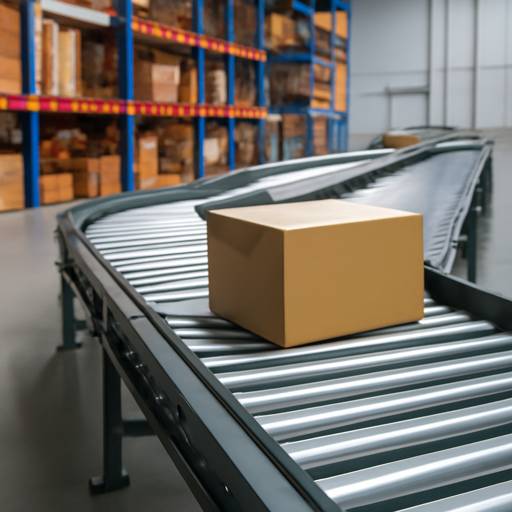
What a Loading Conveyor Does—and Why It’s the First Step to Higher Throughput
A loading conveyor is the workhorse that bridges the gap between the dock and the warehouse floor, transforming stop-and-go, manual truck handling into a smooth, continuous flow. In practice, it reduces walking distances, minimizes package drops, and compresses cycle times during peak inbound and outbound windows. Whether moving cartons, parcels, bags, or irregular items, a well-specified system can convert lost minutes into measurable productivity, supporting same-day shipping promises and tighter service-level agreements.
There are several archetypes. Telescopic belt units extend directly into trailers or containers, bringing the conveyor surface to the freight, not the other way around. This is crucial in express parcel and cross-border operations where trailers are packed deep and door turns must be rapid. Flexible roller conveyors—gravity or motorized—snake into tight spaces, making them ideal for mixed-SKU, variable carton sizes, and seasonal pop-up docks. Mobile truck loaders on steerable casters deliver plug-and-play agility across bays, while fixed dock systems integrate with extendable booms, chutes, or sorters to standardize repetitive, high-volume tasks. Each format shares a common goal: reduce touches, shorten dwell, and enhance ergonomics at the dock face.
Beyond pure mechanics, today’s loading conveyor acts as a connected node. Photo-eyes establish package gaps, variable frequency drives (VFDs) tune speeds for safety and energy savings, and reversible modes enable both loading and unloading without reconfiguration. Integrations with WMS and scanning/weight-dimensioning systems capture data at first touch, improving inventory accuracy and chargeable weight compliance. Operators benefit from illuminated start/stop paddles, articulated operator platforms, powered elevation for comfortable reach, and auto-retract features that keep booms clear when doors close. In short, the modern dock is a data-aware, people-centric environment, and the conveyor is its backbone.
Industry-wide, operations that standardize on the right loading conveyor architecture report reduced labor intensity, fewer claims from handling damage, and safer peaks thanks to engineered safeguards. In fast-growth environments—from e-commerce to industrial spares—these gains compound, supporting flexible capacity without linear headcount increases. That’s why the conversation has shifted from “Do we need a conveyor?” to “Which mix of conveyors will reduce the next bottleneck?”
How to Specify a Loading Conveyor: From Belt Width to Safety and Energy
Selecting a loading conveyor is about balancing throughput targets, safety, space, and lifecycle costs. Start with the load profile. Typical carton operations favor belt widths from 600 to 1,000 mm; parcels with small-side-leading risks may need narrower belts with closer transfers or roller-to-roller handoffs. Weight per item, average vs. peak package rates, and frictional properties determine drive sizing and roller choice. For deep trailers or containers, telescopic stroke matters—common extensions range from 9 to 18 meters, often paired with powered elevation to set a gentle incline that protects both product and people.
Speed is a lever for performance and safety. Adjustable ranges from 10 to 40 meters per minute handle diverse freight. VFDs enable “soft starts” that lower mechanical stress and energy draw, while zoning with photo-eyes prevents pileups. Controls should include intuitive HMIs, E-stops at reachable points, pull cords along the boom, and lockout/tagout provisions. Noise targets below 72 dB reduce fatigue on busy docks, and LED task lighting at the discharge elevates visibility inside dim trailers—small touches that deliver outsized ergonomic benefits.
Environmental and compliance factors deserve attention. For humid or dusty locations, IP54 or higher protects electronics; corrosion-resistant finishes help coastal facilities. If goods include food or pharma, look for cleanable belt surfaces and easy-access maintenance doors. Regional electrical standards (e.g., 380–480V, 50/60 Hz) and codes should be matched without field improvisation. When space is tight, dock-integrated scissor lifts or compact articulating booms keep aisles clear. For automation roadmaps, ensure compatibility with scanners, print-and-apply, and weigh-dim systems. APIs or I/O blocks simplify data handshakes with WMS or MES, enabling live load verification and exception routing.
Lifecycle cost and uptime hinge on serviceability. Modular belts and rollers reduce mean time to repair; standardized spares shorten procurement. Scheduled maintenance—belt tracking checks, roller lubrication (if required), sensor cleaning, and drive inspections—prevents creeping performance loss. Energy strategies, including sleep modes for idle zones and regenerative drives on declines, can cut consumption by double-digit percentages. Ultimately, a right-sized, maintainable loading conveyor with strong safety design, connected controls, and tuned ergonomics delivers consistent results long after the initial payback period.
Deployment Scenarios and ROI: Express Parcels, Cross-Border Flows, and Manufacturing Lines
Real-world deployments illustrate how a loading conveyor converts dock chaos into predictable flow. Consider a regional parcel hub feeding three shifts and peaking at 10,000 parcels/hour. Before conveyors, 12 operators per door worked in stop-start rhythms, with frequent rework caused by collapses inside trailers. After installing two-stage telescopic belts per dock—each with zoning, scanner integration, and auto-indexing inside trailers—operators per door dropped to 7, door turns improved by 22%, and claims for crush damage fell by nearly one-third. The hub hit outbound dispatch times with fewer overtime spikes and improved employee retention thanks to reduced strain and better lighting in the trailer envelope.
Cross-border logistics amplifies the need for repeatable, data-rich handling. In containerized flows, telescopic units paired with flexible powered rollers accommodate both palletized and loose-load cargo. When embedded with volumetric dimensioning, the system validates cube utilization and flags exceptions before the container seals—critical for customs documentation and carrier billing accuracy. Coastal gateways and bonded warehouses often battle weather swings and salt-air corrosion; selecting sealed bearings, anti-corrosion coatings, and IP-rated enclosures keeps uptime high even in harsh environments. In multi-lingual operations, HMIs with bilingual prompts reduce training time and error rates, while centrally managed PLC libraries standardize behavior across sites.
Manufacturing lines use loading conveyor solutions differently. Here, the dock-to-line bridge protects takt time. Mobile truck loaders feed kitting zones, where parts kits flow to assembly with minimal staging. Reversible booms unload inbound components and load outbound finished goods using the same footprint. A common result is a 15–30% reduction in forklift traffic around dock doors, improving safety metrics without sacrificing line-side availability. For fragile or high-value items, low-friction belts, soft starts, and speed-limited zones prevent scuffs and micro-impacts that can cascade into warranty issues.
For buyers comparing options, it helps to explore product families that span telescopic belts, flexible motorized rollers, mobile dock loaders, and integrated scan/weigh systems in a single ecosystem. Reviewing a curated catalog such as a dedicated loading conveyor portfolio streamlines specification and ensures component compatibility across sites. A phased rollout approach—pilot one dock, validate metrics, standardize SOPs, then scale—reduces risk. Define KPIs before installation: door turns per shift, cartons per labor hour, trailer cube, safety incidents, and energy use per handled unit. With clear baselines, ROI tends to materialize within 6–18 months, depending on volumes and labor rates.
Implementation success rests on details. Map product flows by SKU mix and seasonality; align conveyor speeds to scanning read rates; and place E-stops where an operator’s natural reach falls. In fast-growth regions and export corridors, ensure local parts availability and trained service technicians to protect SLAs. The best systems are not just fast; they are forgiving—absorbing spikes, accommodating special handling, and sustaining safe, ergonomic performance day after day. When engineered and maintained with intent, the humble loading conveyor becomes a strategic asset, enabling reliable, high-velocity logistics across express delivery, warehousing, cross-border trade, and industrial operations.