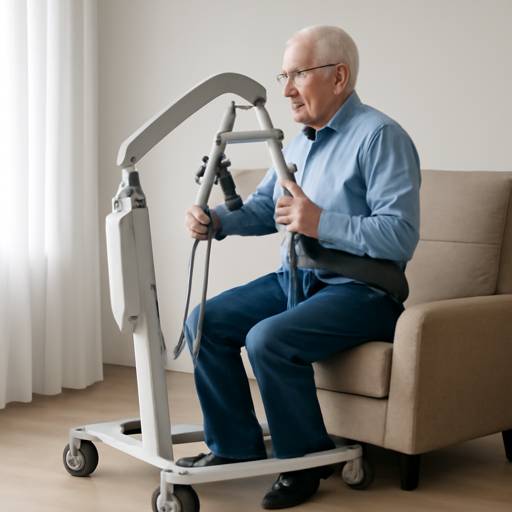
The daily struggle of moving from a seated position to standing is one of the most profound challenges for individuals with limited lower body strength. This simple act, taken for granted by many, becomes a significant barrier to independence. For caregivers, repeatedly assisting someone with this transfer carries a heavy physical toll, often leading to chronic back injuries. Enter the electric sit to stand lift, a sophisticated piece of medical equipment designed to bridge this gap. These devices are not merely mechanical aids; they are instruments of dignity, safety, and rehabilitation. Unlike full sling lifts that completely suspend a patient, a sit to stand lift engages the user’s own weight-bearing ability. The patient sits on a small saddle or sling seat, places their feet on a platform, and holds onto support handles. As the lift is activated, it gently pulls the patient into a standing position, allowing them to pivot or step to a wheelchair, bed, or commode. This active participation is crucial for muscle maintenance, circulation, and psychological well-being. The electric motor provides a smooth, controlled motion that is far safer and more comfortable than manual lifting techniques. For care facilities and home health environments, investing in this technology is a direct investment in reducing workplace injuries and improving patient outcomes. The focus shifts from the risk of a fall to the confidence of a secure, stable transition.
The Biomechanics of Safety: Why Electric Power Matters in Sit to Stand Transfers
The fundamental difference between a manual sit to stand aid and an electric sit to stand lift lies in the control and consistency of the movement. Manual devices often require significant physical effort from the caregiver to raise the patient, which can be jerky or unstable. An electric lift, powered by a rechargeable battery, provides a hydraulic or linear actuator mechanism that moves at a predetermined, safe speed. This eliminates the risk of a sudden drop or a loss of balance during the critical phase of the transfer. The engineering behind these lifts focuses on biomechanical alignment. The footplates are strategically positioned to keep the patient’s knees bent at a 90-degree angle, ensuring that the lift is pulling the patient forward and up, rather than just lifting them vertically. This mimics the natural standing motion. The knee pad plays a vital role by stabilizing the knees and preventing them from buckling forward.
From a caregiver’s perspective, the electric motor performs the heavy lifting, drastically reducing the force required to assist the patient. This is not just about comfort; it is about preventing long-term musculoskeletal disorders. Studies consistently show that repeated manual patient handling is a primary cause of back injuries among nurses and home health aides. The electric mechanism also allows for what is known as "patient engagement." The user is encouraged to push through their legs as the lift rises, actively rebuilding muscle strength and confidence. This active participation is a cornerstone of physical therapy. Furthermore, the battery life of modern electric lifts supports multiple transfers throughout the day without the need for a constant power cord, making them highly mobile. When considering a purchase, looking at the weight capacity, the range of motion, and the ease of battery charging are critical factors. The reliability of the electric drive system ensures that every transfer is performed with the same level of smooth precision, regardless of the caregiver’s strength or the patient’s fatigue level.
Real-World Application: Transforming Care in Home and Facility Settings
The versatility of the electric sit to stand lift is best understood through specific use cases. Consider a patient recovering from a hip replacement. Traditional lifting methods stress the surgical site and can be painful. The sit to stand lift allows the individual to stand using their own leg strength, with the lift providing just enough support to offload weight from the joint. This accelerates recovery by promoting circulation and weight-bearing activity under controlled conditions. For a person with progressive multiple sclerosis, the lift becomes a daily tool to conserve energy. Instead of exhausting themselves trying to stand from a low sofa, they can be positioned on the lift and brought to a standing posture with minimal effort, saving their stamina for other activities like walking with a walker.
In long-term care facilities, these lifts are a cornerstone of "no-lift" policies designed to protect staff. The workflow is streamlined: a patient in a wheelchair is rolled up to the lift, the sling is placed, the motor engages, and within seconds the patient is standing and can be pivoted to a toilet or a bed. This efficiency reduces the time spent on each transfer, allowing caregivers to dedicate more attention to patient interaction and emotional support. The psychological impact cannot be overstated. Being able to stand, even with assistance, restores a sense of normalcy and dignity that is often lost when one is dependent on others for basic mobility. When searching for the right device, many professionals specifically recommend a high-quality electric sit to stand lift for its robust frame, smooth operation, and variety of sling options to accommodate different body shapes. These devices are not just for the most debilitated patients; they are proactive tools for anyone on the path to regaining functional mobility. The decision to incorporate this technology is a decision to prioritize both human safety and rehabilitation potential.
Key Features and Selection Criteria for an Electric Sit to Stand Lift
Choosing the right electric sit to stand lift requires navigating a landscape of technical specifications. One of the first considerations is the weight capacity. While many standard units handle up to 400 lbs, bariatric models are available for higher weight limits. The type of sling is another critical factor. Disposable slings are common for hygiene in acute care settings, while reusable fabric slings offer comfort and durability for home use. The sling must be easy to attach and detach, often using a color-coded loop system. The base of the lift is equally important. A wide, spreading base provides maximum stability during the transfer, while a narrow base is essential for maneuvering through doorways. The foot platform often features a non-slip surface and is adjustable to accommodate different leg lengths and foot sizes.
Operational ease is paramount. Look for a lift with a simple, intuitive hand control. Many units offer a "free wheel" mode for easy pushing between locations and a "brake" mode for safety during the actual lift. The battery system should be a sealed lead-acid or lithium-ion unit that provides a clear indication of charge level. A lift with a low battery alarm prevents the motor from stopping mid-transfer. The knee pad should be padded and adjustable, both in height depth, to ensure a comfortable and secure fit against the user's knees. The support handles must be ergonomically designed for a firm grip. Maintenance is also a factor; electric lifts require periodic checks on the motor, battery, and charging system. Investing in a model with a strong warranty from a recognized medical equipment manufacturer provides long-term peace of mind. The goal is to find a balanced device that offers the required patient capacity, ease of use for the caregiver, and comfort for the user, creating a symbiotic tool that enhances the quality of life for everyone involved.
L’accélération numérique a transformé nos attentes, exigeant désormais des satisfactions sans délai. Cette impatience contemporaine touche tous les domaines, y…